




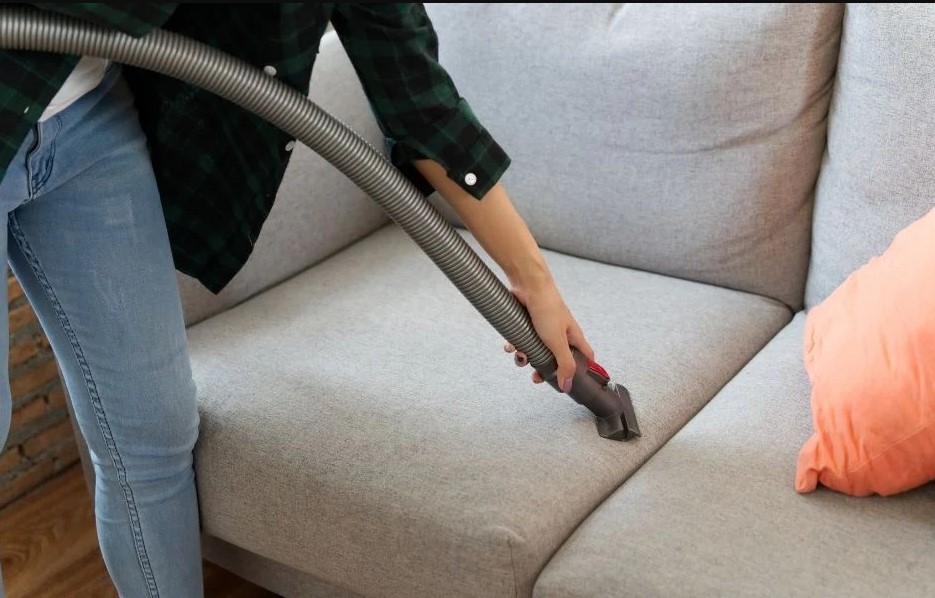

How to Clean a Polyester Sofa is simpler than it sounds. Polyester is a durable, synthetic, and stain-resistant fabric that dries quickly, making it a popular choice for sofas. However, over time, dust, crumbs, spills, pet hair, and odors can build up, leading to stains, fading, pilling, and a worn look.
Regular cleaning is essential to maintain your polyester sofa’s appearance, comfort, and hygiene. With the right tools, DIY cleaning solutions like mild dish soap, baking soda, or rubbing alcohol, and a few safe techniques, you can keep your couch fresh, soft, and long-lasting without risking damage.
Safety Snapshot
When cleaning your polyester sofa, following safety precautions is essential to avoid damaging the fabric or causing stains:
-
Avoid bleach, ammonia, and high heat – These harsh chemicals can weaken polyester fibers, cause discoloration, and even shrink the fabric. Always use mild cleaners suitable for synthetic upholstery.
-
Use white cloths only – Colored cloths or sponges can transfer dye onto your sofa, leaving permanent marks. Always choose a white microfiber or cotton cloth when blotting or wiping stains.
-
Ventilate the area – If you are using solvent-based cleaners or rubbing alcohol, make sure the room is well-ventilated. This prevents harmful fumes from building up and keeps the cleaning process safe and comfortable.
-
Avoid oversaturating the fabric – Polyester dries quickly, but excess water or liquid cleaners can seep into cushions, causing water stains, odors, or mold growth. Always use a damp, not soaked, cloth or sponge when cleaning.
Tools & Supplies You’ll Need
Vacuum with Upholstery Attachment
A vacuum with an upholstery attachment removes dust, crumbs, and pet hair from cushions, seams, and under the sofa.
Microfiber Cloths
Microfiber cloths are perfect for blotting stains and wiping the fabric without causing damage
Soft Bristle Brush
A soft bristle brush helps loosen dirt and lift fibers, especially for embedded debris.
Dish Soap (like Dawn)
Mild dish soap works well on water-safe polyester (W or WS-coded) for spot-treating stains.
Rubbing Alcohol
Rubbing alcohol is ideal for solvent-safe (S-coded) sofas, tackling ink, grease, or tough stains.
Baking Soda
Baking soda neutralizes odors and freshens the sofa before or after cleaning.
Spray Bottle
A spray bottle is handy for DIY cleaning solutions, allowing you to mist the fabric lightly without oversaturating it.
Fan or Proper Ventilation
A fan or good ventilation helps air-dry the sofa quickly and prevents moisture buildup in cushions.
Quick Weekly Clean

Dry Brush All Surfaces
Start by using a soft bristle brush to gently loosen dust, pet hair, crumbs, and other debris from your polyester sofa. Brush the cushions, arms, sides, and back to prepare the sofa for vacuuming.
Vacuum Thoroughly
Use a vacuum with an upholstery attachment to remove all the dirt and debris that was loosened. Make sure to vacuum under the cushions, between seams, and along the edges where dirt tends to collect.
Flip Reversible Cushions
If your cushions are reversible, flip them regularly to prevent uneven wear and sagging. This helps your sofa maintain its shape and comfort over time.
Spot Wipe Stains Carefully
Only spot clean minor stains if your sofa’s cleaning code allows it. Use a damp microfiber cloth with mild dish soap and gently blot the stain. Avoid rubbing, as this can damage polyester fibers or spread the stain.
Deep Clean — Step-by-Step by Cleaning Code
W (Water-Safe)
For water-safe polyester sofas, mix a small amount of mild dish soap with warm water. Dampen a microfiber cloth or soft sponge and gently blot or scrub stains, avoiding oversaturation. After cleaning, rinse with a clean damp cloth to remove soap residue. Let the sofa air-dry completely, then fluff the fibers to restore texture and softness.
S (Solvent-Safe)
For solvent-safe (S-coded) sofas, use rubbing alcohol or a solvent-based cleaner in a spray bottle. Lightly mist the stained area and blot gently with a white cloth. Avoid rubbing to prevent fiber damage. After cleaning, air-dry the sofa and ensure the area is well-ventilated to remove any chemical fumes.
WS (Water or Solvent-Safe)
For WS-coded sofas, use water-based cleaning for light dirt and solvent-based cleaning for grease, ink, or stubborn stains. Always test the solution on a hidden spot first.
X (Vacuum Only)
For X-coded sofas, do not use any cleaning solutions. While polyester is generally durable, X-coded or heavily stained sofas can be tricky to clean safely at home. In these situations, relying on trusted sofa cleaning services helps remove deep stains, odors, and embedded dirt using fabric-safe methods without risking damage to the upholstery.
Polyester Stain Cheat-Sheet
Oil & Grease
For water-safe (W) sofas, use mild dish soap to blot and lift the stain. For solvent-only (S) sofas, use rubbing alcohol carefully on the affected area.
Coffee, Tea & Wine
Use mild dish soap on W-coded polyester. Blot gently and then rinse with a clean damp cloth. Avoid rubbing to prevent spreading the stain.
Ink
Apply isopropyl alcohol for S or solvent-safe areas, but always test on a hidden spot first to avoid discoloration. Blot gently until the ink lifts.
Pet Urine
For water-safe (W) sofas, use an enzyme cleaner to break down odor and stains. Avoid solvent cleaners as they may not work on urine.
Food Stains
Act quickly. Mix mild dish soap with a little water and spot-treat the stain immediately. Blot with a white cloth and rinse lightly if needed.
Odor Removal for Polyester Sofas
Sprinkle Baking Soda
Generously sprinkle baking soda over your polyester sofa. Let it sit for 20–30 minutes to absorb odors and freshen the fabric.
Vacuum Thoroughly
Use a vacuum with an upholstery attachment to remove all the baking soda along with trapped dust, crumbs, and hair.
Use Enzyme Cleaner for Persistent Pet Odors
For W-coded sofas, apply an enzyme cleaner to areas affected by pet urine or strong odors. This helps break down odor-causing compounds safely.
Ventilate the Room
Open windows or use a fan to aid drying and ensure any remaining smells dissipate quickly.
Drying & Finishing
Air-Dry Only
After cleaning, always let your polyester sofa air-dry naturally. Avoid heat sources that can shrink or damage fibers.
Optional: Hairdryer on Cool/Low
If you need to speed up drying, use a hairdryer on cool or low setting. Keep it several inches away from the fabric to prevent heat damage.
Brush or Fluff Fibers
Once dry, gently brush or fluff the fibers with a soft bristle brush or your hands to restore the sofa’s texture and softness.
Ensure Cushions Are Fully Dry
Before placing cushions back on the sofa, make sure they are completely dry to prevent mold or odor buildup inside.
Preventive Care Tips
Apply Code-Safe Fabric Protector Spray
Use a fabric protector spray suitable for your sofa’s cleaning code. This helps repel stains and spills, keeping your polyester sofa cleaner for longer.
Rotate Cushions Regularly
Flip and rotate cushions frequently to prevent uneven wear and maintain the sofa’s shape and comfort.
Treat Spills Immediately
Blot spills as soon as they happen using a white microfiber cloth. Prompt action prevents stains from setting into the fabric.
Vacuum Weekly
Regularly vacuum your sofa to remove dust, crumbs, and pet hair. This keeps your sofa fresh, hygienic, and looking new.
Consistent care keeps polyester sofas looking fresh, but other upholstered pieces need attention too. Using Expert furniture cleaning services is a great way to maintain chairs, cushions, and fabric furniture throughout your home, ensuring long-lasting cleanliness and comfort.
FAQs
Can I Steam Clean My Polyester Sofa?
Avoid high heat on polyester fabric. Steam cleaning is not recommended, as it can cause shrinking, damage, or color fading.
How Often Should I Deep Clean?
For a well-maintained sofa, deep clean every 3–6 months depending on usage and spills.
What’s the Best DIY Cleaner?
For W-coded polyester, a simple solution of mild dish soap and warm water works effectively for spot-cleaning and light stains.
Can Pets Be on the Sofa?
Yes, pets can sit on the sofa, but vacuum and spot-clean frequently to remove hair, dirt, and odors, keeping the sofa fresh.
Prefer to leave it to the professionals? See our Professional sofa cleaning in Dubai.