


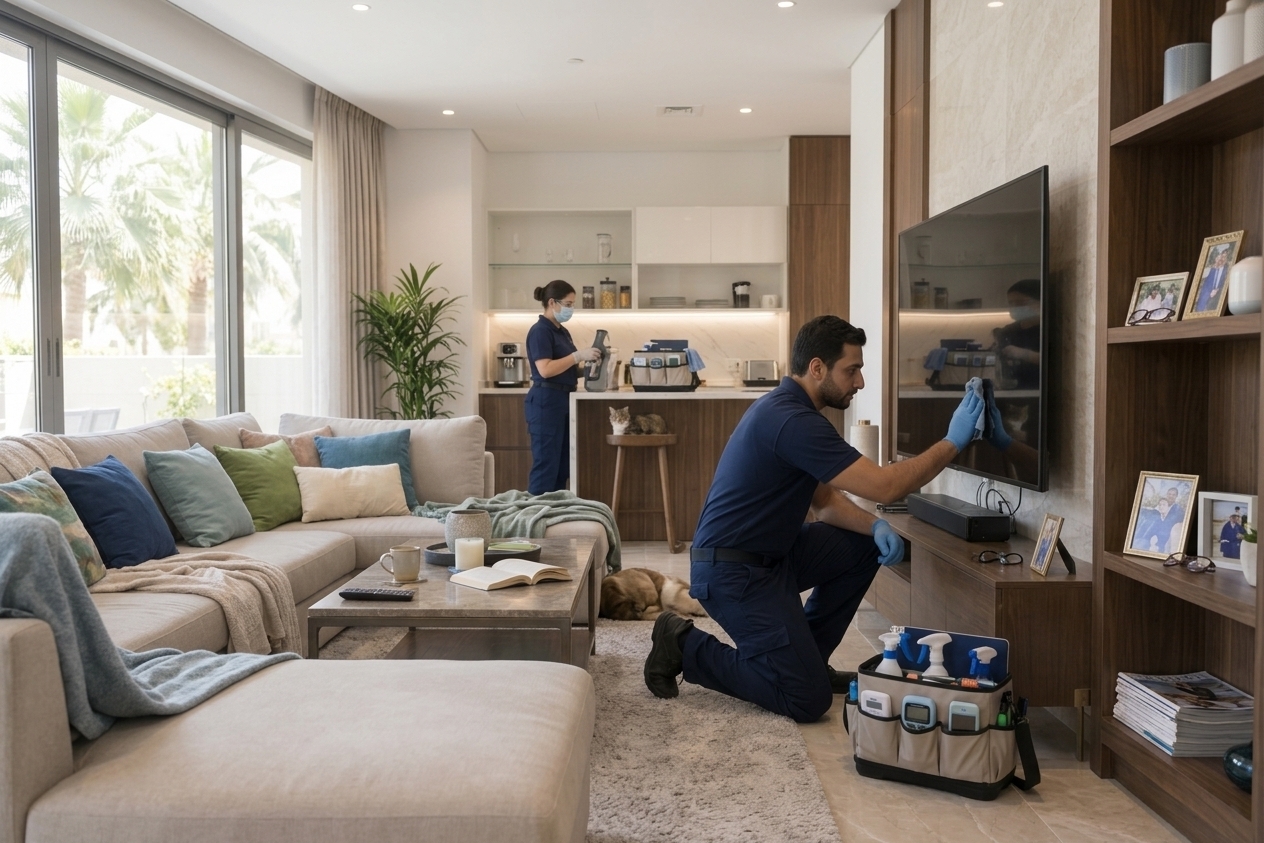

Once everyone's feeling better, it's tempting to just wash the sheets and move on with life. But the flu virus can survive on hard surfaces for up to 48 hours, and it doesn't announce itself. A doorknob or a remote control can still be carrying live virus well after the person who was sick has already recovered and gone back to work. Regular cleaning removes dirt and dust, but it doesn't reliably kill what's living on the surfaces people touch most throughout the day. This guide covers how to disinfect a house properly after influenza, a cold, or any virus, so illness doesn't quietly pass from one person in the household to the next.
Cleaning vs Disinfecting: What's the Difference
While commonly used as interchangeable terms, cleaning and disinfecting are two fundamentally distinct physical and chemical processes. Confusing the two is the primary reason viral infections bounce between family members in a shared living space.
Cleaning is a mechanical process. Using surfactants, warm water, and friction, cleaning lifts loose dirt, body oils, and a portion of surface microbes, rinsing them away down the drain. It improves visual hygiene and reduces the overall microbial load, but it does not reliably kill viral pathogens.
Disinfecting is a chemical process. Disinfectants utilize active antimicrobial compounds such as quaternary ammonium, hydrogen peroxide, or alcohol to deactivate and destroy the cellular structure of viruses and bacteria.
The sequence is non-negotiable: you must always clean before you disinfect. Organic dirt, grease, and finger oils act as a physical shield over viral particles. Spraying a disinfectant directly over unwashed grime neutralizes the chemical before it ever reaches the underlying virus, rendering your sanitization efforts largely ineffective.
How to Disinfect a House After Influenza or a Virus
Halting viral transmission requires targeting high-frequency contact points where hands repeatedly transfer pathogens throughout the day.
1. Sanitize High-Touch Architectural Touchpoints
Walk through the home with a dedicated caddy. Wipe down doorknobs, cabinet handles, light switches, thermostat dials, appliance handles, and faucet levers with a warm, soapy microfiber cloth to strip away oils. Follow immediately with an approved disinfectant spray or wipe. Crucially, allow the surface to remain visibly wet for the entire contact time specified on the manufacturer’s label typically between two and ten minutes before allowing it to air-dry. Wiping a disinfectant off immediately after spraying neutralizes only a fraction of surviving pathogens.
2. Decontaminate Shared Electronics
Remote controls, smartphone screens, gaming controllers, and computer keyboards represent some of the highest-density viral reservoirs in any home. Never spray chemical liquids directly onto electronic components. Instead, lightly dampen a clean microfiber cloth with a seventy-percent isopropyl alcohol solution or use dedicated electronic disinfectant wipes, thoroughly detailing every button and seam before letting it air-dry.
3. Deep-Sanitize Bathrooms and Food Prep Zones
Sanitary suites require rigorous chemical intervention. Thoroughly disinfect toilet flush levers, toilet seat hinges, basin faucets, and vanity counters. In the kitchen, sanitize all food preparation surfaces, dining table edges, and refrigerator door seals, paying particular attention to areas the recovering individual touched while preparing meals.
4. High-Temperature Linen Laundry
Bed linens, pillowcases, bath towels, and clothing worn by the sick individual must be laundered separately from the rest of the family's wardrobe. Wash these textiles on the hottest water setting permitted by the fabric care label (ideally sixty degrees Celsius or higher) to thermally deactivate viral particles embedded deep within the weave.
5. Establish Whole-Home Cross-Ventilation
Once high-contact surfaces are treated and linens are in the wash, open windows throughout the home to establish active cross-ventilation. Replacing stagnant indoor air with fresh airflow dilutes and expels lingering airborne aerosols far more effectively than closed climate control systems.
How to Disinfect a Couch After Flu
Soft furniture is trickier than hard surfaces, since you can't just spray and wipe the way you would a countertop or a doorknob. Start by vacuuming the couch thoroughly, working into the crevices and under any removable cushions, to lift loose debris and skin cells before applying anything wet. Check the fabric's care label before reaching for a spray, since some upholstery handles a fabric-safe disinfectant directly, while others need a gentler approach to avoid staining or watermarking the material. For a couch that's used regularly by someone in the household, removable cushion covers can go straight into the wash on a hot cycle, which reaches what a spray on its own never will.
How to Disinfect a Mattress After Flu
A mattress absorbs sweat, skin cells and whatever germs travel with them, especially during a fever, which makes it one of the most overlooked spots in the whole process. Strip every layer of bedding first and wash it on the warmest setting the fabric allows. Vacuum the mattress surface using an upholstery attachment to clear loose debris, then apply a fabric-safe disinfectant spray, testing an inconspicuous patch first if you haven't used that particular product on the mattress before. Let it air dry completely before putting sheets back on, since trapping moisture underneath fresh bedding just swaps one problem for mold, which is worse than what you started with. If the mattress has a washable protector, launder that separately too, since it's usually the layer that's absorbed the most.
This is also a natural point to fold in a broader reset of the room. Illness tends to keep everyone focused on the person who's sick, so surfaces the virus never touched, like shelves, curtains and skirting boards, often go untouched for weeks by default. If it's been a while since the room had a proper going-over beyond the immediate disinfecting, a full room deep clean covers that gap in one visit rather than leaving it for another week of "I'll get to it eventually."
How to Sanitize Your House Completely
A single wipe-down often isn't enough if more than one person in the household has been affected, or if the illness has dragged on for several days. The CDC's guidance on cleaning and disinfecting recommends closing off the area used by the sick person where possible, increasing air circulation by opening windows, and disinfecting shared items like tablets, remote controls and doorknobs specifically, since these pass between people more than almost anything else in a home. It's worth repeating the full disinfecting process daily for as long as anyone in the household is still symptomatic, rather than treating it as a single task completed once and then forgotten while the illness is still active.
Frequently Asked Questions
How long do flu and cold viruses survive on surfaces? It varies by virus and surface type, but flu viruses can survive on hard surfaces for up to 48 hours, which is why disinfecting shouldn't stop the moment someone starts feeling a little better.
Do I need to disinfect the whole house, or just the sick person's room? Focus on their room plus any shared high-touch surfaces they've used, like bathroom handles, kitchen surfaces and shared electronics. You don't need to treat every surface in the house that they never touched.
Can I use regular cleaning spray instead of an actual disinfectant? No. Cleaning sprays remove dirt but don't reliably kill germs the way a disinfectant does. Clean first to strip away visible dirt, then follow with a product labeled specifically as a disinfectant.
Is it safe to disinfect a couch or mattress with bleach? Generally not. Bleach discolors or damages most fabric and mattress materials. Use a fabric-safe disinfectant spray instead, and always check the care label before applying anything.
How soon after someone recovers should I disinfect their room? Ideally you're disinfecting high-touch surfaces throughout the illness, not just at the end. Once they've recovered, a final full pass covers whatever daily wipe-downs might have missed.
Does washing bedding in cold water kill germs? Not reliably. Hot water is significantly more effective at killing viruses and bacteria trapped in fabric, so use the warmest setting the care label allows.
Do I need special products, or will household cleaners work? Standard household disinfectants work fine for most home situations. Just check that the label states effectiveness against the type of germ you're targeting, and always respect the full contact time listed.
Should I disinfect toys and electronics too? Yes, especially shared items like remote controls, tablets and game controllers, which move between people's hands far more often than most fixed surfaces in the house.
Can I just let time handle it instead of actively disinfecting? You could, but since some viruses survive up to 48 hours on certain surfaces, actively disinfecting cuts that window down significantly and lowers the odds of someone else in the house getting sick next.