


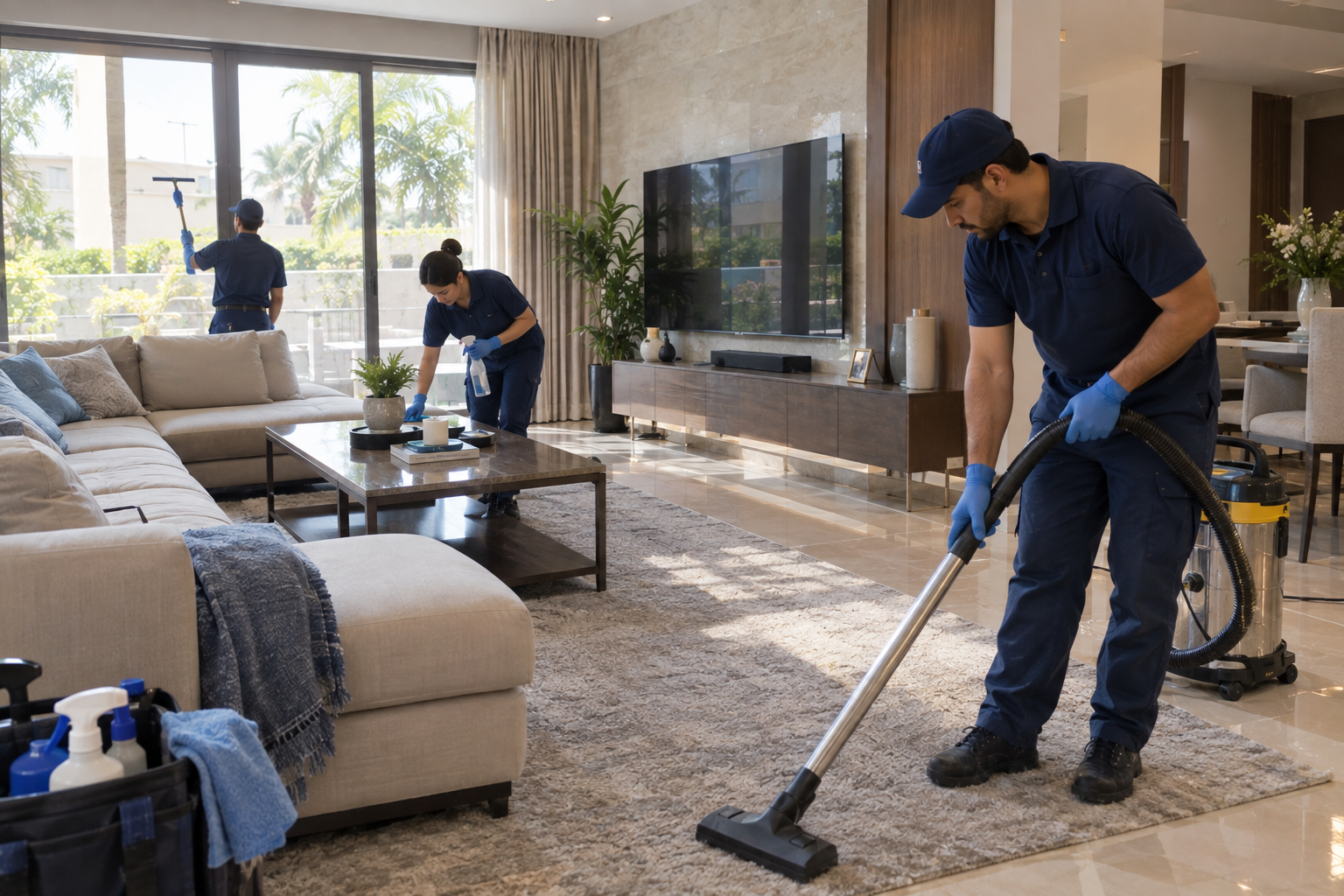

Most homes don't stay dirty because nobody cleans them. They stay dirty because cleaning gets treated as a once-in-a-while event instead of a system with three parts: a regular clean to keep things tidy, a deep clean to reset what regular cleaning skips, and a few daily habits that stop mess from piling up in between. Skip any one of the three and the other two start working overtime. This guide walks through all three, so you know exactly what to do, how often, and what it should cost if you'd rather hand the deep clean to someone else.
What You Need Before You Start

Gather all your supplies in a mobile caddy before touching a single surface. Constantly walking back and forth across the house to retrieve forgotten cloths, brushes, or sprays is where most cleaning time is lost. By keeping your entire arsenal within arm's reach as you move from room to room, you eliminate unnecessary backtracking and maintain a seamless cleaning flow.
Essential Tools
A stack of high-density microfiber cloths, a vacuum with brush and crevice attachments, a flat mop and bucket, a precision glass squeegee, a stiff-nylon scrub brush, and heavy-duty rubber gloves cover virtually every task in the house.
Core Chemistry
Equip yourself with an all-purpose surface cleaner, a streak-free glass cleaner, an acidic bathroom descaler for limescale, an alkaline kitchen degreaser for cooking oils, and a targeted disinfectant for high-touch contact points.
The Golden Safety Rule
Never mix bleach with other cleaning products. Combining bleach with acids (like vinegar or descalers) or ammonia creates toxic chloramine and chlorine gas. Always thoroughly rinse surfaces with clean water before introducing a secondary product.
The Right Order to Clean a House, Step by Step
Cleaning efficiently is governed by physics and sequence. Following three foundational rules stops you from undoing your own work:
Declutter First
You cannot clean around physical obstacles. Clear dishes, gather stray items, and empty trash bins so every surface is accessible before you begin.
Work Top to Bottom
Gravity dictates where dust lands. Always clean high surfaces first such as ceiling fans, vents, and upper shelving and finish with baseboards and floors.
Go Dry Before Wet
Never apply liquid solutions or a damp mop over loose dust and hair. Wetting dry debris turns it into abrasive, streaky mud that scratches surfaces and takes twice as long to clear.
The Step-by-Step Execution Workflow
1. Pre-Treat Wet Zones
Begin by spraying bathroom tiles, tubs, toilets, and kitchen cooktops with their respective cleaners. Letting these solutions sit allows the active chemistry to break down grease and limescale autonomously while you work elsewhere.
2. Dust from High to Low
Move through each room with a dry microfiber cloth or specialized duster. Start with ceiling corners and light fixtures, move down to door frames, window sills, and furniture tops, and finish at the skirting boards.
3. Scrub the Bathrooms
Return to the bathrooms once the cleaning products have had time to work. Scrub the shower glass, descale the taps, disinfect the basin, and sanitize the entire toilet assembly from top to base.
4. Reset the Kitchen
Wipe down cabinet faces, degrease the stovetop and range hood, scrub the backsplash, and sanitize the sink basin and drain.
5. Clean vs. Disinfect High-Touch Zones
Cleaning removes surface soil, while disinfecting neutralizes microscopic pathogens. You do not need to disinfect your entire home; simply wipe down high-frequency contact points, door handles, light switches, cabinet pulls, and taps with a disinfectant spray and allow it to air dry.
6. Detail the Floors Last
Always vacuum and mop your way backward out of each room toward the exit door to avoid stepping on freshly cleaned surfaces. Match your method to the specific flooring:
-
Natural Marble: Use only a pH-neutral stone cleaner with a tightly wrung, barely damp microfiber pad. Acidic cleaners will permanently etch and dull the stone.
-
Porcelain and Ceramic Tile: Use a neutral all-purpose cleaner and agitate dirty grout lines with a stiff-bristled brush before mopping.
-
Hardwood and Laminate: Clean with a specialized wood spray and a micro-damp flat mop. Never allow standing water to settle into floor seams.
-
Carpets and Rugs: Vacuum in a slow, overlapping cross-hatch pattern to lift the carpet pile and extract deeply embedded sand and dander.
Short on Time or Facing a Heavy Mess: Two Targeted Approaches
Standard cleaning routines assume an orderly space and plenty of time. When either of those conditions fails, you need a targeted operational strategy rather than attempting a full, exhausting routine.
The Express Reset: When Time Is Short
When you have less than an hour, abandon the deep-cleaning checklist and focus entirely on the high-impact visual touchpoints that define a clean home. If you are balancing a packed schedule and need a fast 30-to-60 minute routine, follow our step-by-step house cleaning guide for beginners and busy people to manage daily clutter efficiently.
Clear open tables and countertops completely, wipe down the kitchen island and bathroom basin, polish prominent entryway mirrors, and run a single vacuum pass down the central walking corridors. While this bypasses baseboards and detailed scrubbing, targeting high-visibility focal points instantly restores order, eliminates surface clutter, and makes the entire home feel fresh in under forty-five minutes.
The Triage Protocol: When Facing Heavy Clutter
When a home is genuinely chaotic rather than simply due for maintenance, attempting to wipe surfaces around piles of clutter leads to rapid frustration and wasted energy. You must clear the physical space before applying a single drop of cleaner.
Begin with a fast containment pass across the entire property: walk with a heavy trash bag to collect all disposable waste, load dirty dishes into the dishwasher, and start a cycle of laundry so passive cleaning occurs in the background. Once the floor and counters are clear, isolate your focus to a single room rather than wandering between spaces. Setting a dedicated twenty-five-minute timer creates focused urgency seeing one corner completely transformed delivers immediate visual momentum, keeping you energized and preventing the exhaustion of unfinished tasks.
Clean Like a Professional: The System That Actually Works
Professionals aren't faster because they work harder, they work to a system: the same route through every room, high to low, no backtracking; spray, wait, then wipe, since cleaners need contact time to loosen grime; and colour-coded cloths, so a cloth used in the toilet never touches the kitchen counter. A final walk-through from the doorway of each room catches streaks and missed corners before you call it done.
What Is Deep Cleaning, and How Is It Different?
A regular clean handles what you see every day, counters, floors, visible dust. Deep cleaning goes further, into the spots that build up silently: baseboards, grout lines, inside the oven and fridge, behind appliances, ceiling fans and AC vents. The two aren't competing, they work together, a regular clean keeps a home presentable, and a deep clean resets what the regular routine can't reach.
A few signs tell you it's overdue. Dust that resettles within a day or two usually means it's built up inside vents or behind furniture, not just on the surface. A musty smell that survives normal cleaning often comes from grout or a damp patch. And if you can't remember the last time you moved the sofa or wiped the baseboards, that's usually the clearest sign of all.
Inside a Deep Clean: Room by Room
Work through the house methodically rather than tidying the obvious parts first. In the kitchen, empty and wipe the fridge, clean inside the oven and microwave, degrease the range hood, and pull appliances out where you can to clean behind them. In bathrooms, scrub grout and tile, descale the showerhead and taps, and clean behind the toilet. In bedrooms, vacuum the mattress, wash curtains, and get under the bed and furniture. Across the whole house, wipe baseboards, light switches and door frames, and vacuum upholstery thoroughly.
Vents are worth a specific mention. Unclip the covers, wash them, and vacuum inside the opening as far as the hose reaches, and check the AC filter at the same time, since a clogged filter pushes more dust into the room than the vents themselves. On full duct cleaning, the EPA's guidance notes it's never been shown to prevent health problems on its own, and it's only recommended as needed, not on a routine schedule, so it's worth doing only if the vents are visibly dusty or haven't been touched in years.
How Long Does It Take to Clean a House? 1 BHK, 2 BHK and 3 BHK
Cleaning time depends mostly on how many rooms there are, not just the total floor area. In Dubai and across the region, homes are described by BHK, meaning bedroom, hall and kitchen. Here's what a standard clean usually looks like at each size, along with roughly how the time splits between rooms:
Studio and One-Bedroom Apartments (1 BHK)
Standard Duration: 1.5 to 2.5 Hours (Single Operative)
A typical one-bedroom layout comprising a single bedroom, integrated living space, one bathroom, and a kitchen requires an average of two hours of focused maintenance. Time allocation divides naturally across three core zones: thirty to forty minutes dedicated to the combined bedroom and living quarters for dusting and vacuuming; thirty to forty-five minutes allocated to the bathroom for glass descaling and sanitary disinfection; and twenty to thirty minutes focused on kitchen counters, backsplash degreasing, and external appliance wiping. The remaining fifteen to twenty minutes are reserved for vacuuming, hard floor washing, and final perimeter checks.
Two-Bedroom Apartments (2 BHK)
Standard Duration: 2.5 to 4 Hours (Single Operative)
A standard two-bedroom property introduces an additional sleeping quarter and typically a second full bathroom, increasing the total labor requirement by roughly sixty to ninety minutes. The operational workflow allocates twenty to thirty minutes per bedroom, thirty to forty minutes for the central living and dining salon, thirty to forty-five minutes per individual bathroom, and thirty to forty minutes for the kitchen. Because two-bedroom apartments often feature larger kitchen layouts and expanded dining zones, surface detailing and floor mopping require dedicated staging to ensure seamless progression from private to communal zones.
Three-Bedroom Apartments (3 BHK)
Standard Duration: 3.5 to 5 Hours (Single Operative)
Three-bedroom floor plans expand both square footage and fixture density, often encompassing two to three bathrooms, extended balcony thresholds, and expansive open-concept living rooms. Following the established per-room benchmarks, the third bedroom and additional sanitary suite add approximately one full hour of labor over a two-bedroom baseline. For a single cleaner, completing a three-bedroom residence in a single continuous session reaches the threshold of physical efficiency, which is why multi-person crews are frequently deployed to compress the working timeline into two hours of simultaneous execution.
Cleaning a House in Dubai: Dust, Sand and AC
Homes in Dubai face challenges that most cleaning guides skip. Fine dust and sand settle quickly, especially near balcony doors and windows, so vacuum the door and window tracks before wiping them and use damp cloths instead of dry ones. AC vents and filters collect dust constantly, so wipe the vents and check the filters regularly, more often in dusty weather.
Humidity in bathrooms encourages mildew, so ventilate after showers and wipe wet surfaces. Hard water marks are common on taps and glass, and a descaler works better on them than a general cleaner. After a sandstorm or a very dusty day, keep the doors and windows closed and do a quick surface wipe once it passes.
Cost and Frequency of Deep Cleaning
A deep clean typically costs one and a half to three times more than a regular clean, since it takes longer and covers more ground. Cost depends mainly on home size, how long it's been since the last one, and any add-ons like upholstery or curtains, a 1 BHK sits at the lower end, while a 3 BHK or villa costs more. If you'd rather get a firm number than an estimate, deep cleaning services in Dubai can quote based on your home's actual size and condition.
For most homes, once every three to six months keeps things from building up. Pets, kids, high foot traffic or nearby construction push that frequency up, while a solid weekly routine and none of those factors can stretch it to twice a year. Moving in or out, post-renovation, or after an illness in the house are also good reasons to deep clean outside the usual schedule.
How to Keep a House Clean Between Deep Cleans
A deep clean resets a home, but daily habits are what keep it that way, and a clean home affects more than how it looks. A cluttered environment tends to create stress and make it harder to concentrate, while cleaning and decluttering can lift mood and give a stronger sense of control over your space. It also just works better day to day, less time searching for things, fewer emergency cleanups before guests arrive.
Making the bed, washing dishes right after a meal, and a 10-minute reset before bed, clearing surfaces and wiping the counter, prevent most of the mess that piles into a weekend project. Giving every item a specific home, a basket for shoes, a tray for keys, closes the gap between clean and organized, since a house can be clean and still cluttered if things don't have a place to go.
On top of daily habits, a simple weekly and monthly rhythm keeps everything else on track:
-
Daily: wash the dishes, wipe kitchen counters, make the beds, sweep high-traffic areas
-
Weekly: dust all surfaces, vacuum and mop every room, clean the bathrooms, change bed linen, empty the bins
-
Monthly: clean the AC vents and check filters, clean window tracks and baseboards, wipe out the fridge, vacuum the sofas
With kids, a toy basket in every main room and a 10-minute tidy-up before bed keeps things from spiraling, and involving them in small tasks builds the habit early. With cats, a litter mat and daily scooping handle most of the mess, and a lint roller by the door takes care of the rest. None of this needs to be perfect, a house that resets quickly matters more than one that never gets messy in the first place.
Frequently Asked Questions
What order should I clean my house in?
Declutter first, then dust from high to low, clean the bathrooms and kitchen, and finish with the floors. Always go dry before getting wet.
What's the difference between cleaning and deep cleaning?
Regular cleaning covers everyday surfaces. Deep cleaning adds the spots that build up over time, like baseboards, grout, vents and the inside of appliances.
How long does it take to clean a house properly?
A standard clean takes about 1.5 to 2.5 hours for a 1 BHK, 2.5 to 4 hours for a 2 BHK, and 3.5 to 5 hours for a 3 BHK, longer for a villa or a very messy home.
How often should I deep clean my house?
Every three to six months for most homes, more often with pets, kids, or heavy foot traffic.
How much does it cost to deep clean a house?
Usually one and a half to three times the cost of a regular clean, depending on the home's size and condition.
Can I deep clean a house myself, or do I need a professional?
Most of it is doable yourself with time and the right products. A professional is worth it for a large home, a first deep clean in years, or duct and upholstery work that needs specific equipment.
Do I need to disinfect my whole house?
Not usually. Regular cleaning removes most germs, and disinfecting high-touch surfaces is enough unless someone in the house is sick.
Do I need to clean my air ducts every time I deep clean?
No, only if they're visibly dusty, moldy, or haven't been serviced in years.
Why does my house get messy again so quickly?
Usually because daily habits like dishes and a quick nightly reset aren't happening, so mess outpaces the weekly clean.
Is a deep clean necessary before moving into a new home?
Yes, it's one of the most common reasons people book one, since even a home that looks clean can carry dust or grime from before.
How do I keep a house clean with kids or pets?
A toy basket and a nightly reset for kids, a litter mat and daily scooping for cats. Both routines work fine together once they're in place.
Is it better to clean alone or with help?
Splitting rooms between two people roughly halves the time, one on bedrooms and living areas, the other on the kitchen and bathrooms.